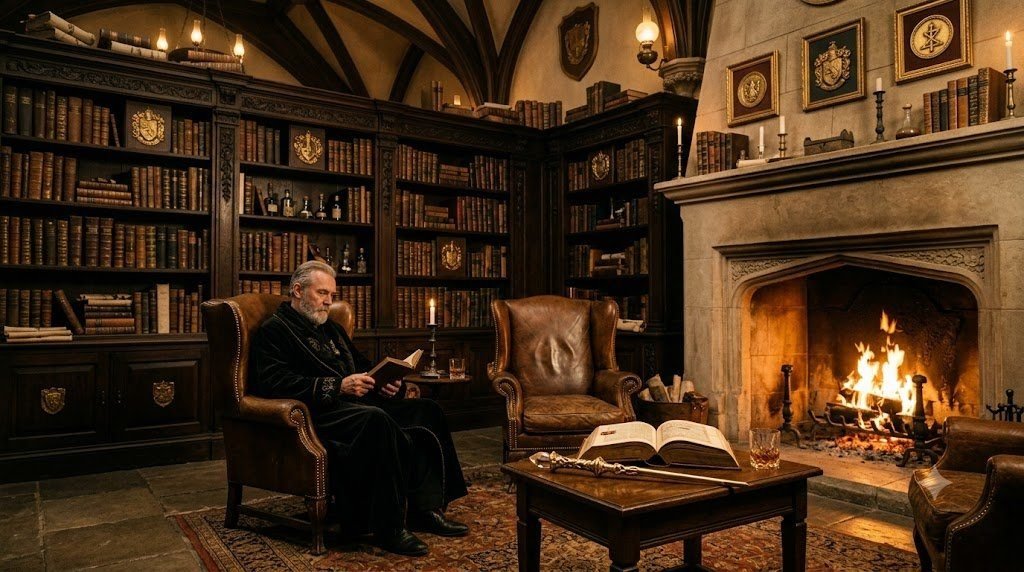
The Brotherhood of the Secret: Why Conjuring Demands Sanctuaries
Throughout the centuries, the art of conjuring has occupied a unique, paradoxical position in human culture. Unlike music, painting, literature, or sculpture—where artistic methods, brush techniques, and harmonic scales are taught openly in universities and celebrated in public manuals—the primary artistic medium of the illusionist is the Secret. The secret is the invisible foundation upon which all wonder is constructed; once a secret is casually broadcast or cheapened into common knowledge, the illusion dissolves into banality, and the emotional experience of the impossible is destroyed forever.
Consequently, to preserve their proprietary methodologies, foster artistic excellence, protect intellectual copyright, and maintain ethical standards, professional illusionists have historically organized themselves into exclusive, highly secretive fraternal orders and global governing bodies. These organizations—from the prestigious halls of London’s The Magic Circle to the international Olympiad of FISM (Fédération Internationale des Sociétés Magiques)—function as the sacred guardians of the craft. Within these closed sanctuaries, magicians gather behind heavy oak doors, bound by solemn oaths of secrecy, to share cutting-edge innovations, study historical archives, and push the artistic frontiers of human deception.
🗝️ The Sacred Latin Motto of The Magic Circle
‘Indocilis Privata Loqui’ — Latin for ‘Not apt to disclose secrets’ or ‘Incapable of speaking private matters’. This sacred oath, adopted at The Magic Circle’s founding in 1905, remains the guiding moral compass for all member magicians worldwide.
The Magic Circle (London, 1905): The Vatican of Conjuring
On October 2, 1905, a small group of seventy-three prominent British magicians gathered at Pinoli’s Restaurant in Wardour Street, Soho, London, under the chairmanship of veteran performer Servais Le Roy. Frustrated by the rampant piracy of illusion designs and the exposure of trade secrets in cheap penny-dreadful pamphlets, they resolved to form a formal fraternal society: ‘The Magic Circle’. Their founding president was none other than David Devant, the legendary stage partner of John Nevil Maskelyne at St. George’s Hall.
Today, headquartered in a magnificent, purpose-built headquarters near Euston Station in central London—known as The Centre for the Magic Arts—The Magic Circle is universally recognized as the most prestigious magical society in the world. Its membership comprises roughly 1,500 elite performers across dozens of countries, including international superstars, heads of state, and prominent intellectuals (King Charles III was admitted as a member in 1975 after performing a sleight-of-hand cup trick).
Admission into The Magic Circle is notoriously rigorous. A candidate cannot simply pay a membership fee; they must be sponsored by two existing members of long standing, submit to extensive professional vetting, and travel to London to perform a live, formal audition performance before a panel of stern senior examiners. The applicant’s act is evaluated on technical sleight of hand, presentation, original artistry, and adherence to performance ethics. Those who pass are awarded the degree of Member of The Magic Circle (MMC), with elite artists subsequently elevated to Associate of the Inner Magic Circle (AIMC) and the ultimate honor: Member of the Inner Magic Circle with Gold Star (MIMC)—a title limited to only three hundred living magicians across the globe.
| Organization / Fraternity | Founding Year & Locus | Current Global Headquarters | Primary Operational Function | Notable Members / Leaders |
|---|---|---|---|---|
| The Magic Circle | 1905 (London, UK) | The Centre for the Magic Arts (London) | Preservation of ethics, archives, and elite peer recognition | David Devant, Harry Houdini, King Charles III, Derren Brown |
| FISM (World Federation) | 1948 (Lausanne, Switzerland) | Governing Board (Rotates globally) | Organizes the triennial World Championship of Magic | Shin Lim, Lance Burton, Arturo Brachetti, Norbert Ferré |
| Society of American Magicians (S.A.M.) | 1902 (New York City, USA) | National Council (USA) | Oldest fraternal magic organization; Houdini was president | Harry Houdini, Howard Thurston, Harry Kellar |
| International Brotherhood of Magicians (I.B.M.) | 1922 (Winnipeg, Canada) | St. Louis, Missouri, USA | Largest global membership with local ‘Rings’ in 80+ nations | Dai Vernon, Tony Slydini, Bill Malone |
| The Academy of Magical Arts (The Magic Castle) | 1963 (Hollywood, CA, USA) | The Magic Castle (7001 Franklin Ave) | Exclusive private clubhouse and world-renowned performance venue | Milt Larsen, Cary Grant, Neil Patrick Harris |
FISM: The Olympic Games of Stage and Close-Up Magic
If The Magic Circle is the Vatican of conjuring, FISM (Fédération Internationale des Sociétés Magiques) is its Olympic Games. Founded in 1948 in Lausanne, Switzerland, by visionary French illusionist Jules Dhotel, FISM unites over one hundred national magical societies representing more than fifty thousand magicians across the globe.
Every three years, FISM hosts the World Championship of Magic—a titanic, week-long global competition held in rotating host cities such as Stockholm, Beijing, Blackpool, Busan, and Quebec City. Thousands of international illusionists gather to watch hundreds of national champions compete across rigorous competitive categories: Stage Illusion, Manipulation, General Magic, Comedy Magic, Mentalism, Micro Magic, and Card Magic.
The judging at FISM is merciless. A panel of international master judges scores acts across six strict criteria: Technical Skill, Showmanship & Presentation, Originality & Innovation, Artistic Impression, Entertainment Value, and Magical Atmosphere. If an act fails to achieve a minimum scoring threshold, judges actively award ‘No First Prize’—ensuring that winning a FISM Grand Prix remains the absolute pinnacle of career achievement in the magic world. Champions like Lance Burton (1982), Norbert Ferré (2003), and Shin Lim (2015) were launched from FISM victories directly into multimillion-dollar Las Vegas headline residencies.
The Magic Castle: Hollywood’s Victorian Sanctuary of Mystery
Perched high in the Hollywood Hills overlooking Los Angeles stands a magnificent, turreted 1908 Victorian mansion: The Magic Castle. Founded in 1963 by brothers Milt and Bill Larsen alongside Irene Larsen, The Magic Castle is the private clubhouse for the Academy of Magical Arts (AMA). Entering the castle requires a strict formal dress code and a secret password whispered to an ornate carved owl embedded in the wall, which slides open a concealed bookcase door.
Inside, the Castle is a living, breathing cathedral of illusion: multiple intimate performance showrooms (the Close-Up Gallery, the Parlour of Prestidigitation, the Palace of Mystery), secret passages, floating ghost pianos that play musical requests autonomously (Irma), and museum-quality collections of historical artifacts, including Houdini’s handcuffs and Dai Vernon’s personal correspondence. For sixty years, The Magic Castle has served as the creative crucible where legendary masters—most famously Dai Vernon, who held court at the Castle bar for the final three decades of his life—mentored generations of rising conjuring artists.
Ethics, Exposure, and the Sacred Code of Secrecy
Why do magical fraternities guard secrecy with such ferocious intensity? The answer lies in the unique ethics of the craft. Unlike proprietary patents in industrial manufacturing—which are granted legal protection for twenty years before entering the public domain—magical methods have historically enjoyed almost zero statutory legal copyright protection under national intellectual property laws. A magician cannot easily patent a trick without publishing the blueprint in public patent registries, which immediately exposes the secret to anyone with an internet connection.
Consequently, the magic fraternity enforces its own rigorous internal judicial system. When a member violates the sacred oath by exposing secrets on television, selling knock-off copies of another inventor’s proprietary gimmicks, or publishing unauthorized exposés, the society’s Council of Ethics convenes. The offender faces formal expulsion, social ostracization, and the permanent revocation of their membership credentials—a devastating professional sentence in a community where reputation is everything.
Conclusion: Custodians of the Impossible
Secret societies and magical fraternities are not relics of medieval paranoia; they are the vital, living heart of performance illusion. By providing a safe haven where original ideas are nurtured, ethical boundaries are enforced, and historical traditions are preserved across centuries, these institutions ensure that magic continues to evolve as a vibrant, dignified, and exalted fine art. As long as human beings gather in the dark to seek wonder, the guardians of the sacred circle will stand watch, protecting the sublime light of human imagination.
The Maskelyne Dynasty and St. George’s Hall
While The Magic Circle was formally established in 1905, the spiritual home of British magical excellence was already thriving at St. George’s Hall in Langham Place, London. Directed by John Nevil Maskelyne and later his son Nevil Maskelyne, St. George’s Hall ran continuous daily illusion shows for over three decades, establishing the world’s most sophisticated theatrical laboratory for illusion inventors. Here, legendary illusionists David Devant, Charles Bertram, and P.T. Selbit tested revolutionary stage illusions before elite Victorian and Edwardian audiences.
The Maskelyne family approached magic as a serious branch of applied physics and patent engineering. They established the strict ethical precedent that an illusion was a work of intellectual art that deserved rigorous protection against commercial piracy. The collaborative environment of St. George’s Hall paved the direct path toward the founding of The Magic Circle, instilling a profound cultural ethos that a magician must be an educated gentleman, an ethical scholar, and an innovative craftsman.
Women in Magical Fraternities: Breaking the Century-Old Glass Ceiling
For most of its historical existence, the inner sanctum of magic societies was an exclusively male brotherhood. Following the Victorian gentlemen’s club model, women—even legendary professional performers like Adelaide Herrmann, Sophie Bowles, and Okita—were strictly barred from membership in prestigious societies like The Magic Circle and the Society of American Magicians. Female performers were relegated to the role of ‘assistants’—the smiling, silent figures in sequins who were sawn in half, levitated, and vanished, while the male magician claimed sole authorship of the miracle.
This gender barrier began to fracture in the late twentieth century. In 1991, after eighty-six years of institutional exclusion, The Magic Circle held a historic vote among its membership, officially amending its constitution to admit women as full members. Pioneering female magicians like Fay Presto, Laura London, and Megan Swann (who made history in 2021 by being elected the first female President of The Magic Circle) shattered centuries of patriarchal prejudice. Today, women lead international magical fraternities, revolutionizing performance aesthetics and inspiring a diverse new generation of illusionists.
The Broken Wand Ceremony: The Sacred Requiem of Magicians
Perhaps no ritual within the world’s elite magic fraternities is more solemn, moving, and steeped in ancient tradition than the ‘Broken Wand Ceremony’. Dating back to the death of British illusionist Charles Bertram in 1907, the ceremony is performed at the funeral or memorial service of a deceased member of The Magic Circle, the Society of American Magicians, or the International Brotherhood of Magicians.
During the graveside or chapel service, a high-ranking officer of the society steps forward holding a specially crafted, solid wooden magic wand. The presiding officer delivers a poignant eulogy recounting the deceased performer’s devotion to the craft, stating that their hands have laid down the tools of illusion, their magic on earth is finished, and their spirit has passed beyond the veil. With a deliberate, resonant snap, the officer breaks the wooden wand in two, placing the severed pieces atop the casket or handing them to the grieving family. The ceremony visually symbolizes that the performer’s personal magic has ended, reminding all assembled of the fragile mortality of the artist and the eternal life of the art.
The Digital Crisis: Algorithmic Exposure vs. Sacred Craft
In the twenty-first century, magic societies face an unprecedented existential challenge: the internet and social media. In previous decades, learning a secret required immense patience, personal dedication, and mentorship: visiting a local magic shop, gaining the trust of senior performers, or ordering specialized private manuscripts from secret society archives. Today, a ten-year-old child with a smartphone can search YouTube or TikTok and watch thousands of unauthorized tutorial videos exposing the secrets of classic illusions in low-resolution thirty-second clips.
Magical institutions have responded by evolving from secretive gatekeepers into proactive cultural defenders. Rather than attempting the impossible task of censoring the entire internet, organizations like The Magic Circle and FISM emphasize that knowing the secret is not the same as mastering the art. Exposure channels can reveal the mechanical method, but they cannot teach stage presence, comedic timing, voice modulation, psychological misdirection, or the emotional alchemy that transforms a trick into an unforgettable human experience. By championing artistic performance over mere secret hoarding, modern magic fraternities ensure that the noble craft will continue to thrive in the digital age.